Influencer Marketing in Romania vs Europe vs US (2026)

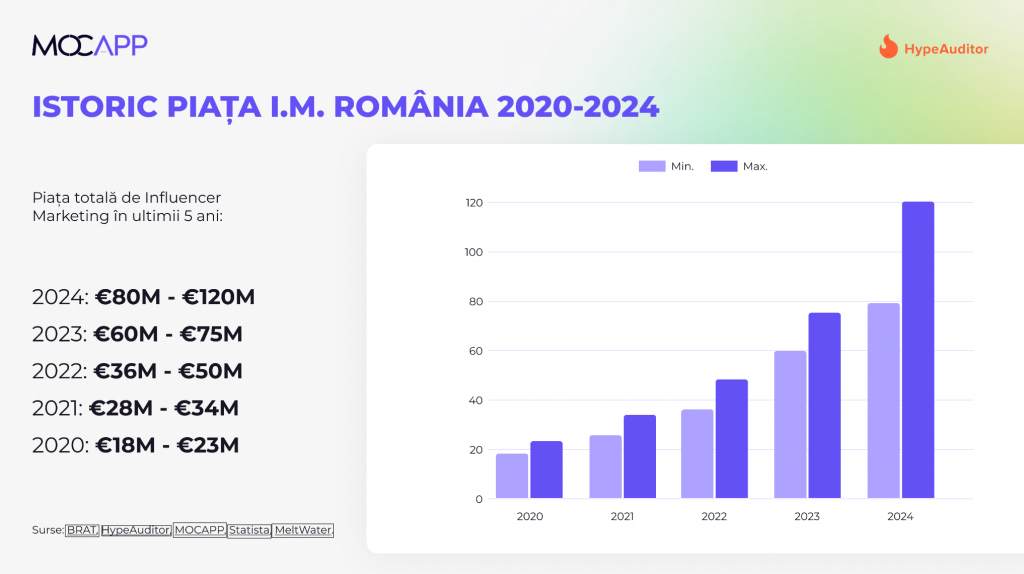
The growth of Influencer Marketing in Romania is faster than in the rest of Europe, but it is still far from that of Western industries. Brands are investing around $100- $ 120M / year in 2026, as shown in the MOCAPP IM Study.
As we will show, Influencer Marketing is experiencing unprecedented global growth, with the industry projected to reach $32.55 billion by 2026, representing a remarkable expansion from previous years.
This analysis examines the comparative trends between European and US markets, with relevant details about the Romanian market (as part of the E.U.).
Revealing significant differences in market size, platform preferences, regulatory approaches, and consumer behaviours. The European market is emerging as a dominant force, while the US market continues to mature with increasingly sophisticated performance-driven strategies (Sources: Awisee and Cognitive Market).
Market Size and Growth Analysis
Influencer Marketing in Romania
Romania’s Influencer Marketing sector is evolving rapidly, mirroring broader European trends while carving out a distinct local identity.
In 2026, the market was valued at approximately €130 million, with projections indicating robust growth to €180 million by 2027. This expansion is fueled by increased digital adoption, the proliferation of social media usage across age groups, and a growing appetite among Romanian brands for authentic, direct-to-consumer engagement.
Romanian marketers overwhelmingly favour Instagram, TikTok, and YouTube (7%-9%) as their primary platforms for influencer collaborations.
Instagram remains the dominant channel, prized for its visual storytelling capabilities and high engagement rates, especially among urban millennials and Gen Z. TikTok’s meteoric rise has redefined content formats, with short-form videos and viral challenges capturing the attention of younger demographics and driving rapid follower growth for local creators. YouTube holds significant sway, particularly for long-form content and educational or entertainment-driven campaigns.
FAQ: Influencer Marketing in Romania
Q1: “How many active influencers are there in Romania in 2026?” – Around 50000. Source: IQads.
Q2: “How many influencer campaigns are there in Romania in 2026?” – Approx. 400000-450000 sponsored posts. Source: BRAT Romania
Q3: “How many different companies invest in Influencer campaigns in Romania in 2026?” – Around 5400-6000. Source: BRAT Romania.
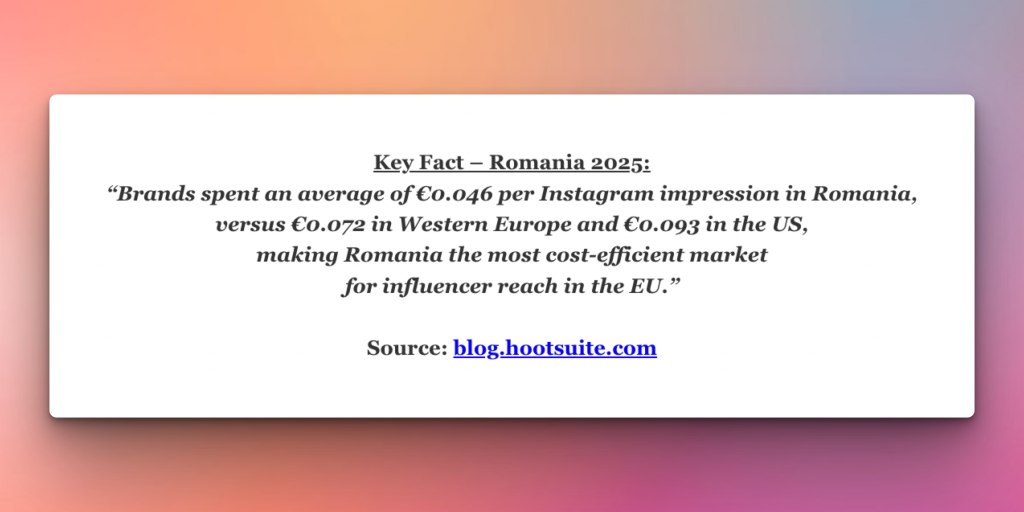
Key Fact – Romania 2026:
“Brands spent an average of €0.046 per Instagram impression in Romania, versus €0.072 in Western Europe and €0.093 in the US, making Romania the most cost-efficient market for influencer reach in the EU.” Source: blog.hootsuite.com
Regional Market Comparison – EU vs US
The European Influencer Marketing market has established itself as a global leader, currently valued at €15 billion and projected to exceed €20 billion by 2025, representing over 30% growth. In contrast, the US market, while mature, is projected to reach $9.29 billion by 2025, demonstrating a more moderate but steady growth trajectory.
The European market’s rapid expansion is driven by increasing digitalisation, burgeoning interest in influencer collaborations among brands, and the region’s diverse consumer markets.
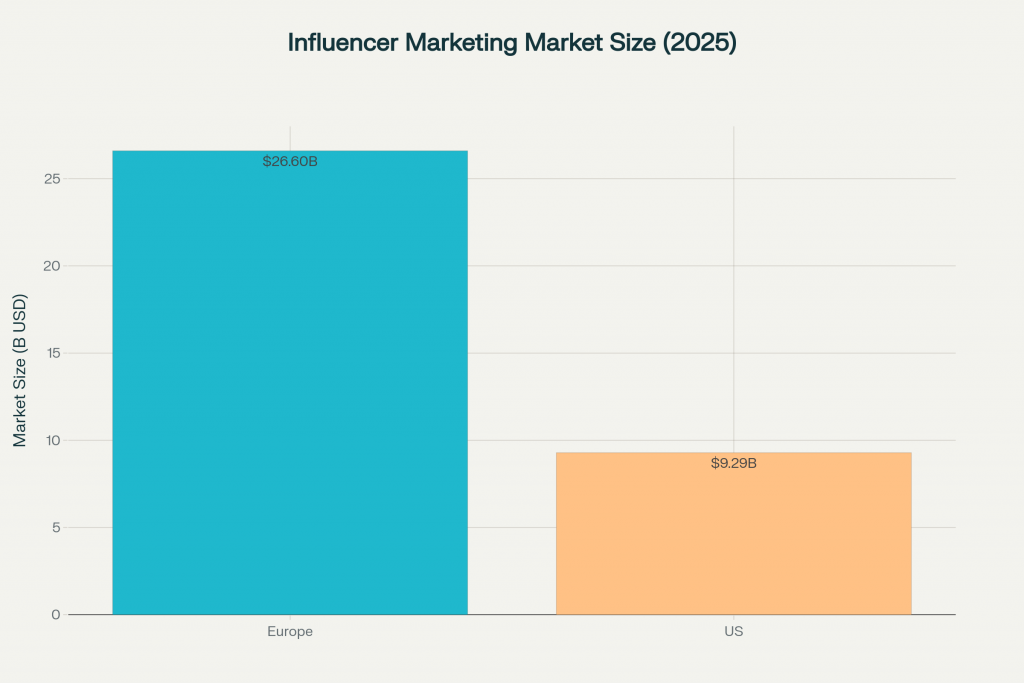
According to Cognitive Market Research, the European Influencer Marketing platform market alone accounted for over 30% of global revenue, with a market size of $4.14 billion in 2025, and is expected to grow at a compound annual growth rate (CAGR) of 36.5% through 2031. The Influencer Marketing in Romania is increasing by 12%-20% y.o.y. in 2065-2031.
This growth significantly outpaces many other regions and reflects the strategic importance brands place on influencer marketing within their marketing mix.
Growth Drivers and Market Dynamics
The European market’s accelerated growth stems from several key factors, including consumers trusting influencers more than traditional advertising, increased collaborations across SaaS, fintech, fashion, and travel sectors, and tighter privacy laws that are shifting brands toward influencer-driven marketing strategies (Source: Awisee). Meanwhile, the US market benefits from established e-commerce infrastructure, high smartphone ownership rates, and widespread access to high-speed internet, creating a robust foundation for influencer marketing integration (Source: Influencer Marketing Hub).
Platform Usage and Engagement Trends
Platform Preference by Marketers
Social media platform adoption varies significantly across regions, with TikTok leading marketer adoption at 66% globally, followed by Instagram at 47% and YouTube at 33% (Source: Digital Marketing Institute). However, regional preferences show distinct patterns: European marketers increasingly favour platforms that offer authentic content creation opportunities, while US marketers prioritise platforms with robust analytics and performance tracking capabilities (Sources: Merca20 and Captiv8).
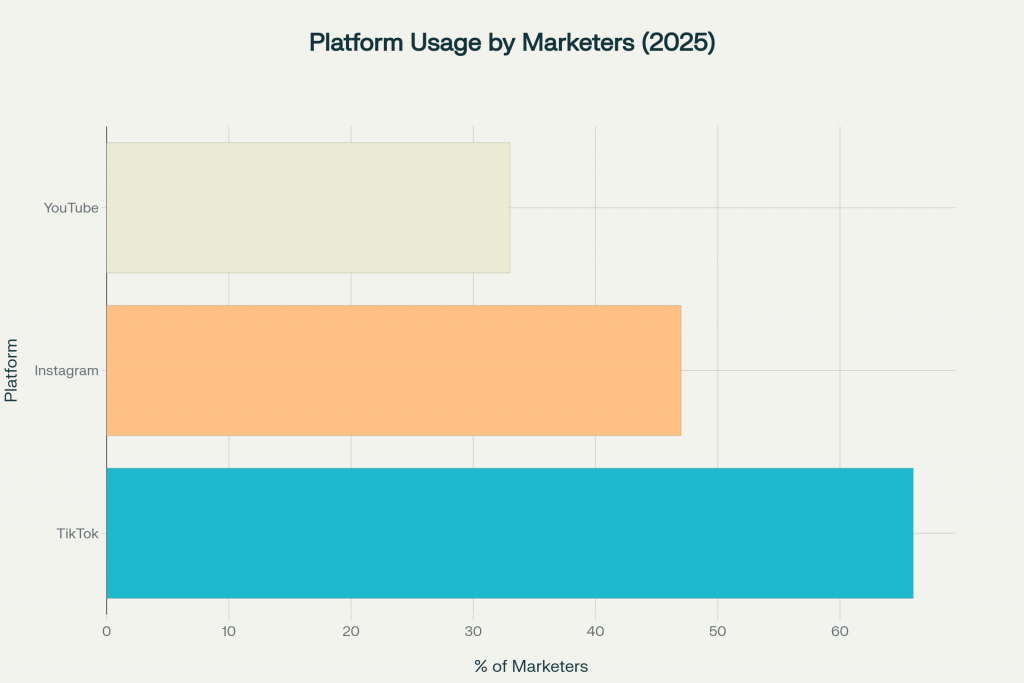
The dominance of TikTok represents a significant shift in the Influencer Marketing landscape, with the platform’s algorithm-driven content prioritisation resulting in the highest organic engagement rates at 2.50%. Instagram maintains its position as the second-choice platform for influencer partnerships, particularly strong in fashion, beauty, and luxury sectors across European markets.
Engagement Rate Analysis
Platform-specific engagement rates reveal important insights for campaign planning, with TikTok leading at 2.50% average engagement, followed by Instagram and other platforms. However, marketers report that 56% believe over-saturation of creator content is their biggest challenge in 2025, driving interest in emerging platforms like Bluesky, Threads, Reddit, Twitch, and Pinterest (Source: Captiv8). This saturation is particularly pronounced in established markets, prompting brands to diversify their platform strategies.
ROI and Performance Metrics
Return on Investment Analysis
Influencer marketing continues to deliver exceptional returns, with the average ROI reaching $5.78 for every dollar spent, while top-performing campaigns achieve up to $20 per dollar invested. This performance represents an 11x higher ROI than traditional digital media, making influencer marketing one of the most cost-effective marketing channels available.
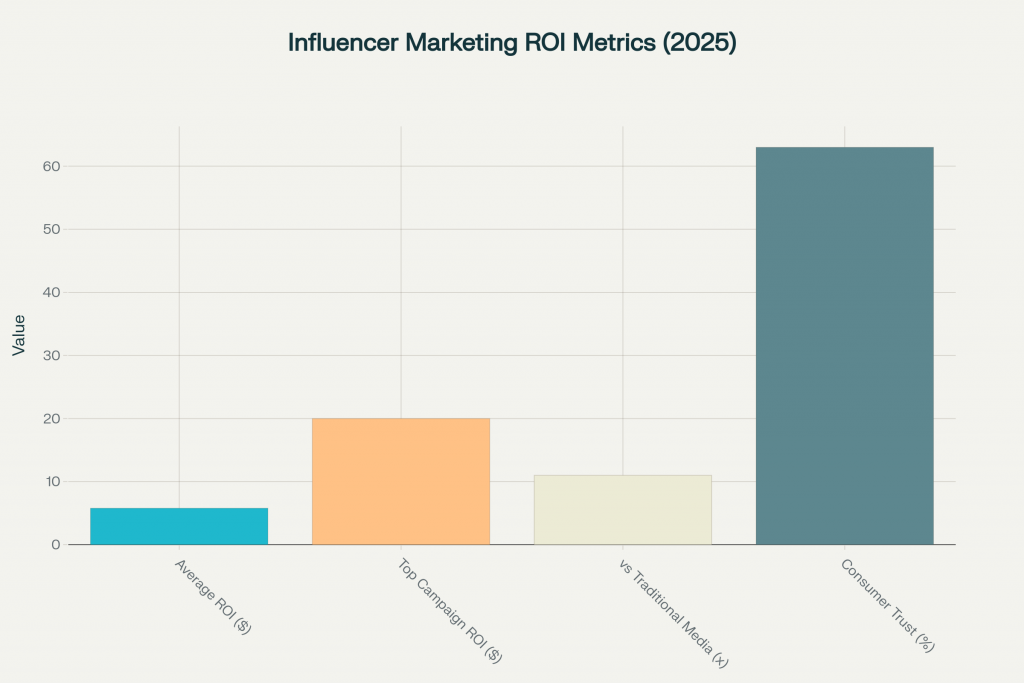
Consumer trust remains a critical factor: 63% of consumers trust influencer recommendations more than traditional advertising, which significantly impacts purchasing decisions. Performance-based compensation models are gaining traction, with brands increasingly shifting toward paying influencers based on actual results rather than upfront fees.
Cost-Effectiveness and Budget Allocation
Despite strong ROI, 72% of brands forecast budget increases of 10% to 49% by 2025, underscoring the strategic importance of influencer marketing in the evolving digital landscape. European brands show particular selectivity, with 61% of Spanish marketing professionals planning to be more demanding in their influencer partnerships, focusing on brand alignment and authentic collaborations.
Influencer Type Performance Analysis
Micro vs Macro Influencer Effectiveness
The data reveal a significant performance advantage for micro-influencers, who achieve engagement rates of 7% to 20%, compared with macro-influencers’ 3% to 6%. This superior engagement comes at a lower cost, with micro-influencers charging approximately $0.20 per engagement versus $0.33 for macro-influencers.
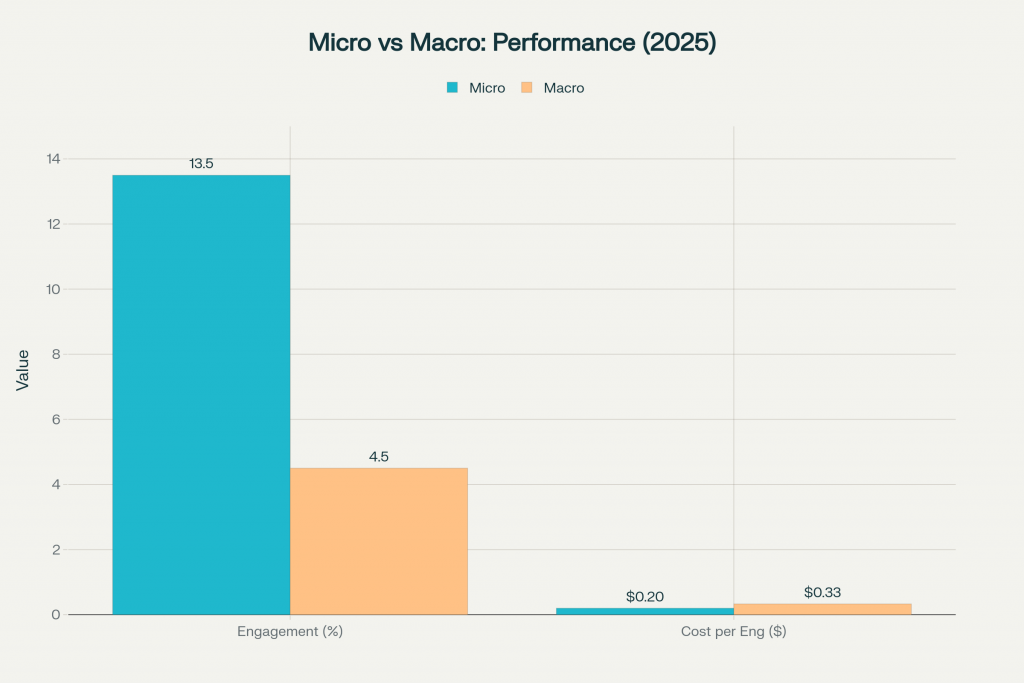
Nano-influencers are the fastest-growing segment, accounting for 75.9% of Instagram’s influencer base in 2024, as brands recognise the value of authentic, highly engaged niche communities. European markets, in particular, favour this approach, with brands prioritising engagement quality over follower quantity.
Performance Metrics by Influencer Tier
Research indicates that micro-influencers can have engagement rates up to 60% higher than macro-influencers, making them increasingly attractive for budget-conscious campaigns (Source: Digital Plannet). The trend toward micro and nano-influencers aligns with consumer preferences for authentic content and personal recommendations over celebrity endorsements (Sources: Hypefy and Tanke.fr).
Live Shopping and Social Commerce
Market Size and Growth Projections
Live shopping is a rapidly expanding segment of influencer marketing, with the European market valued at €10 billion in 2023 and the US market at $50 billion. Projections indicate the US market will grow to $68 billion by 2026, while Europe is expected to reach approximately €15-20 billion during the same period.
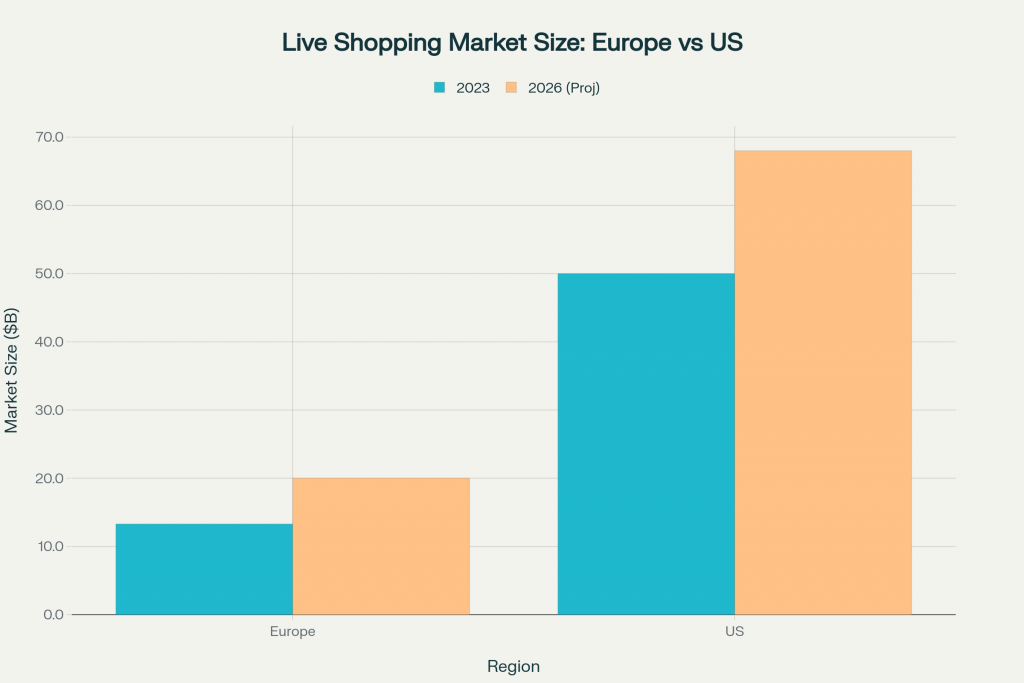
European adoption rates show 35% of retailers implemented live shopping strategies in 2023, while US adoption rates are estimated at 45%, reflecting the market’s maturity and infrastructure advantages (Source: Optiview). Live shopping conversion rates can reach up to 30%, significantly exceeding traditional e-commerce conversion rates.
Platform Integration and Consumer Behaviour
Integrating live shopping with social media platforms has created seamless shopping experiences, with adults aged 18-34 showing the highest adoption rates.
European (including Romanian) consumers particularly favour live shopping for fashion and apparel, followed by beauty, wellness, and electronics.
Regional Market Differences
Regulatory and Cultural Distinctions
European (including Romania, as a part of the European Union) and US markets operate under distinctly different regulatory frameworks that significantly impact influencer marketing strategies.
The European Union’s stringent GDPR compliance requirements and the Digital Services Act set a high bar for data privacy and transparency, in contrast to the US FTC guidelines, which primarily focus on disclosure requirements.
European markets emphasise authenticity and selectivity, with brands building longer-term partnerships and prioritising cultural alignment. In contrast, US markets tend toward more transactional relationships, focusing on performance metrics and data-driven optimisation.
Market Maturity and Approach
The US market, characterised as more mature, shows 86% of marketers planning to utilise influencer marketing by 2025, reflecting widespread adoption and sophisticated measurement capabilities. European markets, while emerging rapidly, show 72% of businesses allocating significant marketing budgets to influencer partnerships, up from 58% in 2022.
Key Trends Shaping 2026 – Influencer Marketing in Romania
Technology and AI Integration
Artificial Intelligence is revolutionising influencer marketing, with 66.4% of marketers reporting improved campaign outcomes through AI integration (Source: Influencer Marketing Hub). AI-powered personalisation accounts for 35.2% of significant trends, while content creation and optimisation represent 24.8% of AI-driven improvements.
Content and Strategy Evolution
Multi-platform campaigns have become essential, with successful strategies spanning TikTok for viral content, Instagram for community building, YouTube for long-form education, and LinkedIn for professional credibility. Live streaming has emerged as the leading content strategy, favoured by 52.4% of marketers.
Performance-Based Models
The shift toward performance-based compensation models reflects the industry’s maturation, with brands increasingly paying for tangible outcomes rather than exposure metrics.
This trend is particularly pronounced in the US market, where ROI measurement and conversion tracking take precedence.
Conclusion: Influencer Marketing in Romania vs EU vs US
The Influencer Marketing in Romania in 2025 presents a tale of different markets: Romania and the whole of Europe’s rapidly expanding, authenticity-focused approach versus the US’s mature, performance-driven ecosystem.
While Europe leads in market size with projected revenues of €20+ billion, the US market’s $9.29 billion represents a sophisticated, conversion-focused environment.
Romania is growing fast (3x in the last 4 years) but is far from its full potential, at approx. $115-130M / year.
The data clearly demonstrates the superiority of micro-influencer strategies, the growing importance of live shopping integration, and the critical role of AI in campaign optimisation. As brands navigate this evolving landscape, success will depend on understanding regional preferences, leveraging appropriate influencer tiers, and maintaining authentic connections with increasingly discerning audiences.
Test our Platform for free here: https://mocapp.net/register
You may also like